An interactive art installation questioning how we memorialize and archive people.
Art Installation, Interactive Documentary
2026
Description
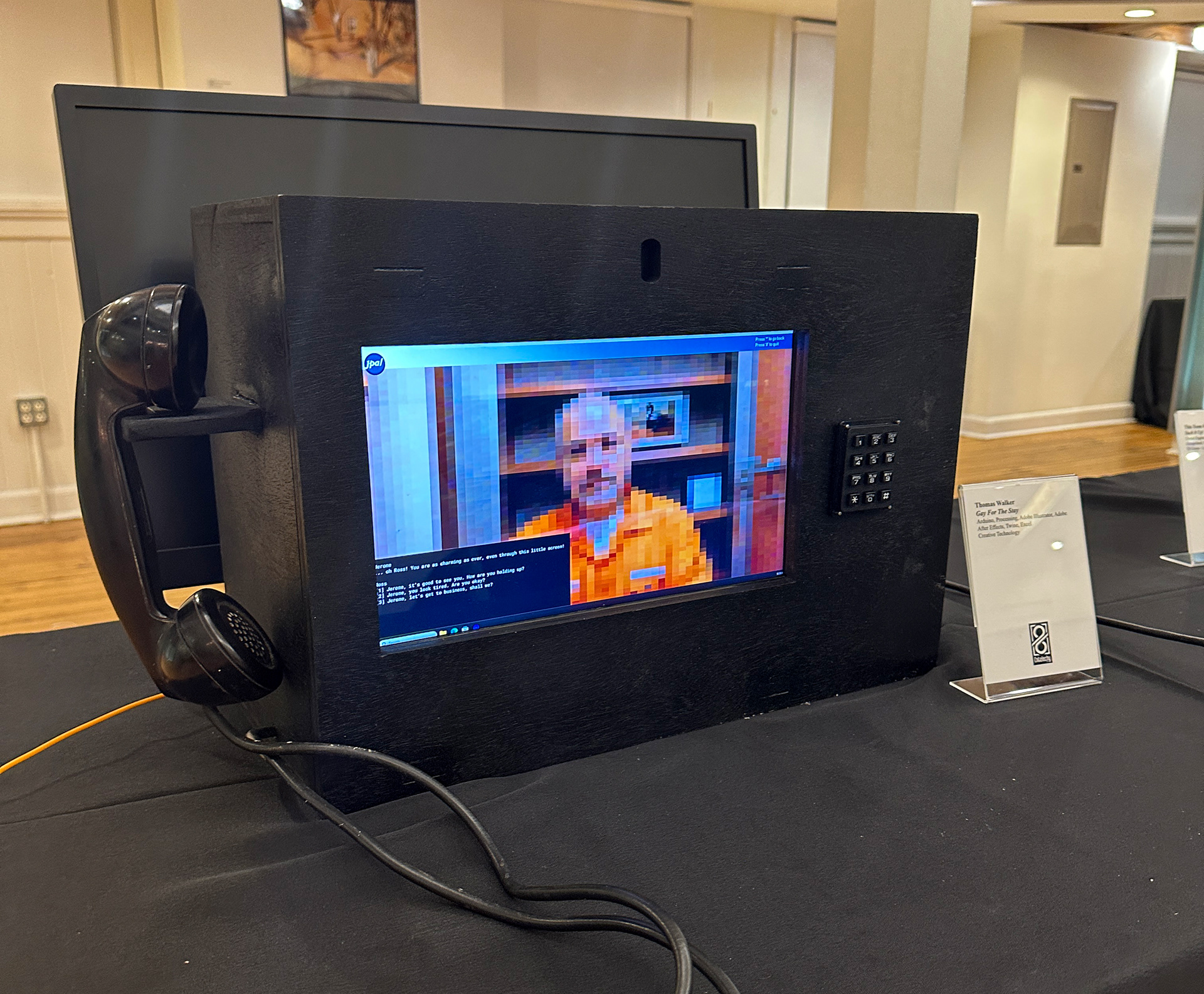
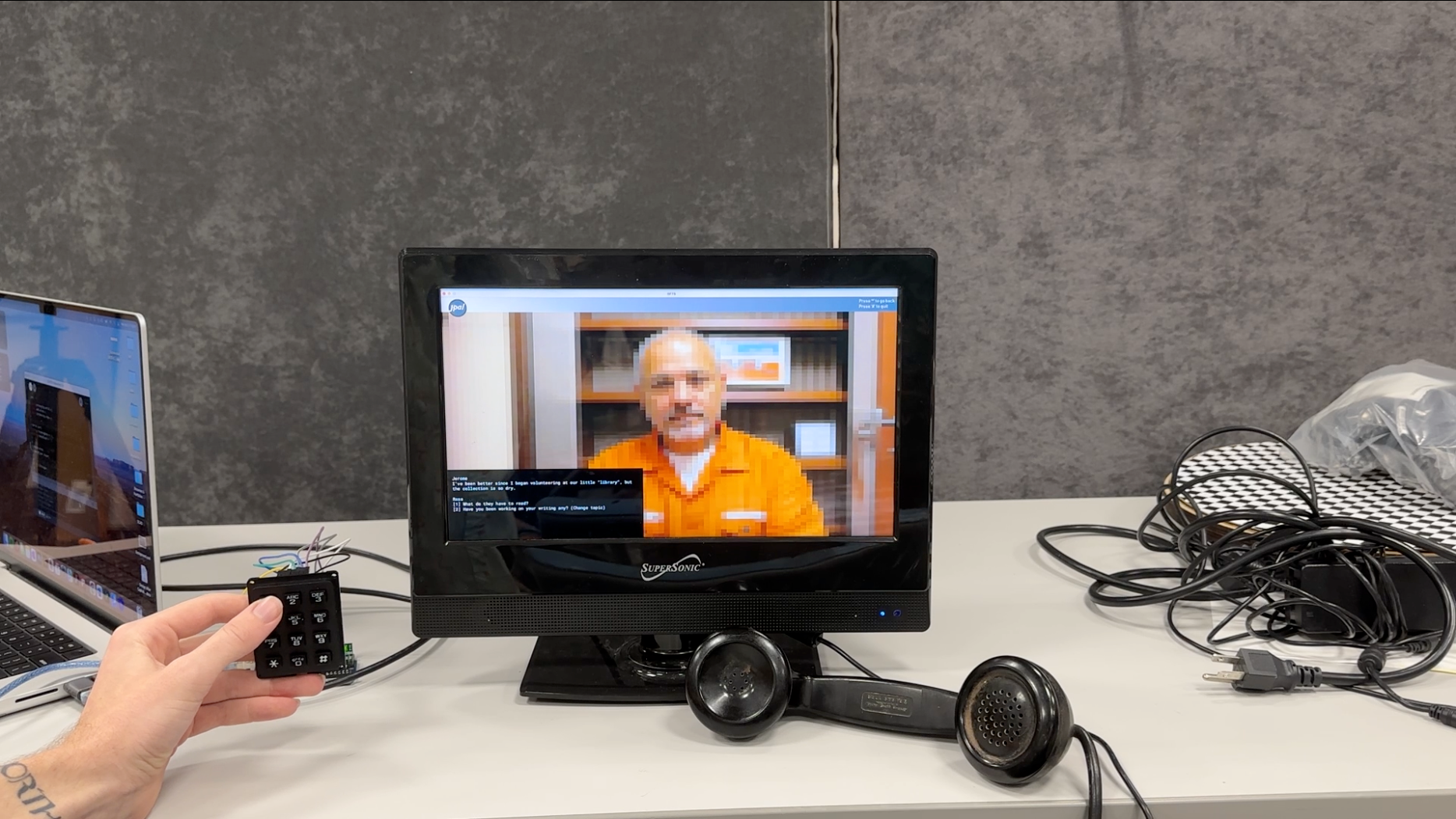
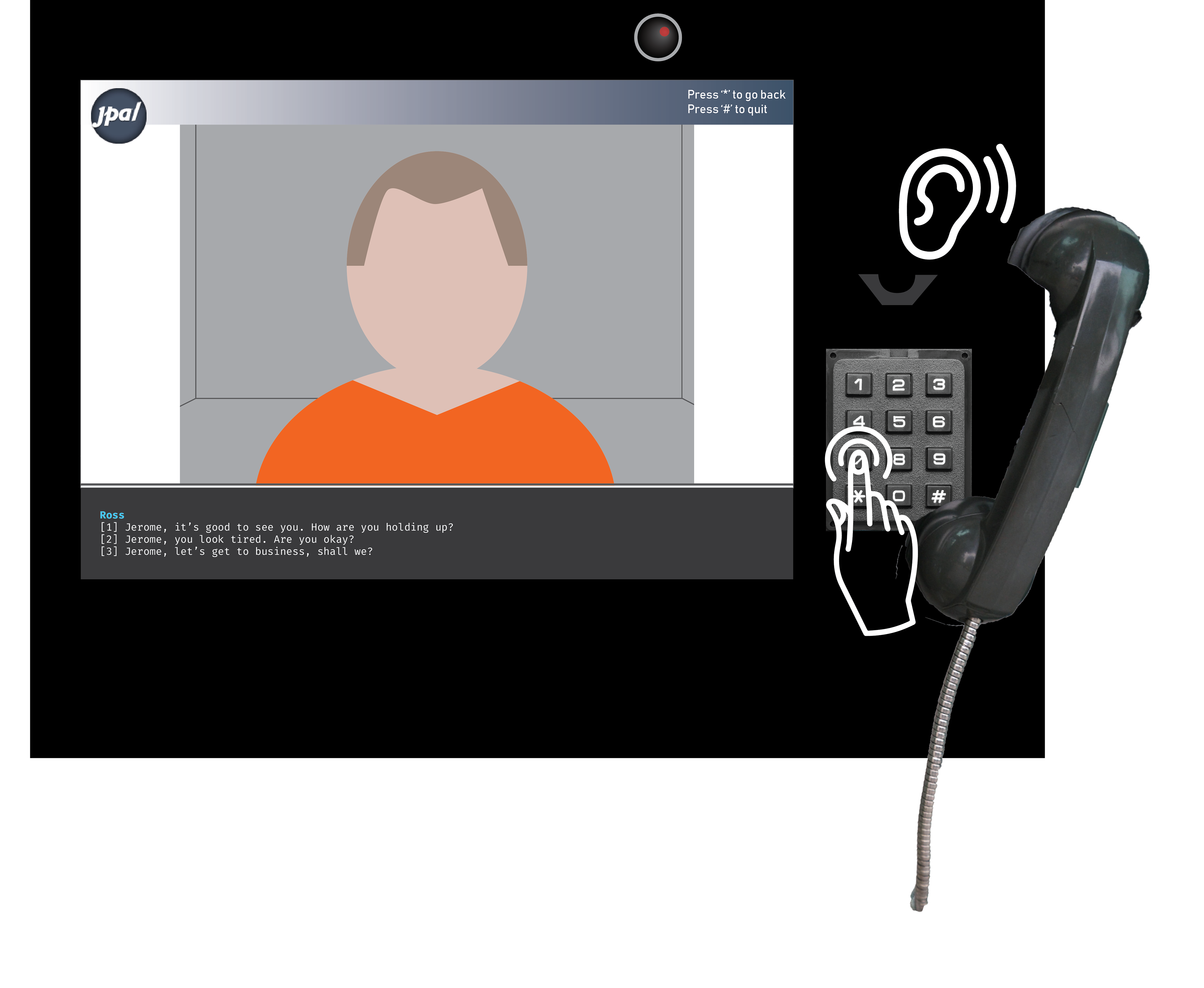
The piece is an interactive visual-novel-style game simulating speaking to prisoners with a prison video visitation system. The viewer can click the 0-9 number pad buttons to enter scenes and interact with a character to uncover narrative pieces.
Artist Statement
Growing up, my church took a group photograph of attending families every Easter. The walls of the church are lined with decades of these photos. Beneath each framed photo was a hand-drawn sketch my pawpaw would make. Before he passed away, he meticulously drew each person’s silhouette and numbered their head to indicate their name in a numbered legend sheet.
In this piece, I recreated this analogue approach to memorialization with real-time computer vision and machine learning to interrogate how contemporary memory-making technologies simultaneously honor and erase us—flattening identity while also allowing it to persist beyond our physical presence.
Pose in front of this piece to create a numbered group photo, and scan the QR code to save your photo and preserve the record of your visit and the people you shared it with.
In this piece, I recreated this analogue approach to memorialization with real-time computer vision and machine learning to interrogate how contemporary memory-making technologies simultaneously honor and erase us—flattening identity while also allowing it to persist beyond our physical presence.
Pose in front of this piece to create a numbered group photo, and scan the QR code to save your photo and preserve the record of your visit and the people you shared it with.
Research
The dialogue is a retelling of the last years of English playwright Oscar Wilde's life, based on his writings while imprisoned for sodomy. I drew from, The Annotated Prison Writings of Oscar Wilde (2018) and watched the film, The Happy Prince by Rupert Everett (2018).
Interaction
The physical structure is designed to imitate video visitation systems used to facilitate calls between inmates and their visitors. It uses a number pad for all interactions by the user, giving an analog feel and a sense of the 90’s time period. The pixelated graphics and dialogue box take inspiration from narrative video games which provides cues for the viewer to interpret how to interact with the interface.Process
Tools
TouchDesigner for real-time visualizationMedia Pipe for AI image recognition of viewers
Google Drive for storing photos for viewers to download
Stages
Created a test version in TouchDesigner using a depth camera. The number labeling did not place properly.
Switched to using webcam visuals processed by the MediaPipe plugin for TouchDesigner where numbers were properly assigned.
Recreated the TouchDesigner flow to sequentially number multiple people rather than just one.
Referenced photos of my grandfather's work to recreate the visual style.Installed at the museum and made final modifications.
Reflection
This project was created for an exhibition with varies types of visitors and large groups. Thematically, the piece affords quick, fun interaction as well as thoughtful reflection to meet the needs of this audience.
Through the piece, visitors participate in their own memorialization and must grapple with the ways in which their identities are stripped, visually, by how the piece translates their image into a silhouette.
In the future, the exhibition would function better with a higher quality facial recognition model and a DSLR camera rather than a webcam, as it sometimes struggled to properly visualize the visitors.