An investigative documentary game that explores the 1998 murder of Matthew Shepard through primary source documents, revealing documentary games' potential for educating and evoking empathy.
True-Crime Game, Interactive Documentary, Graduate Thesis
2026
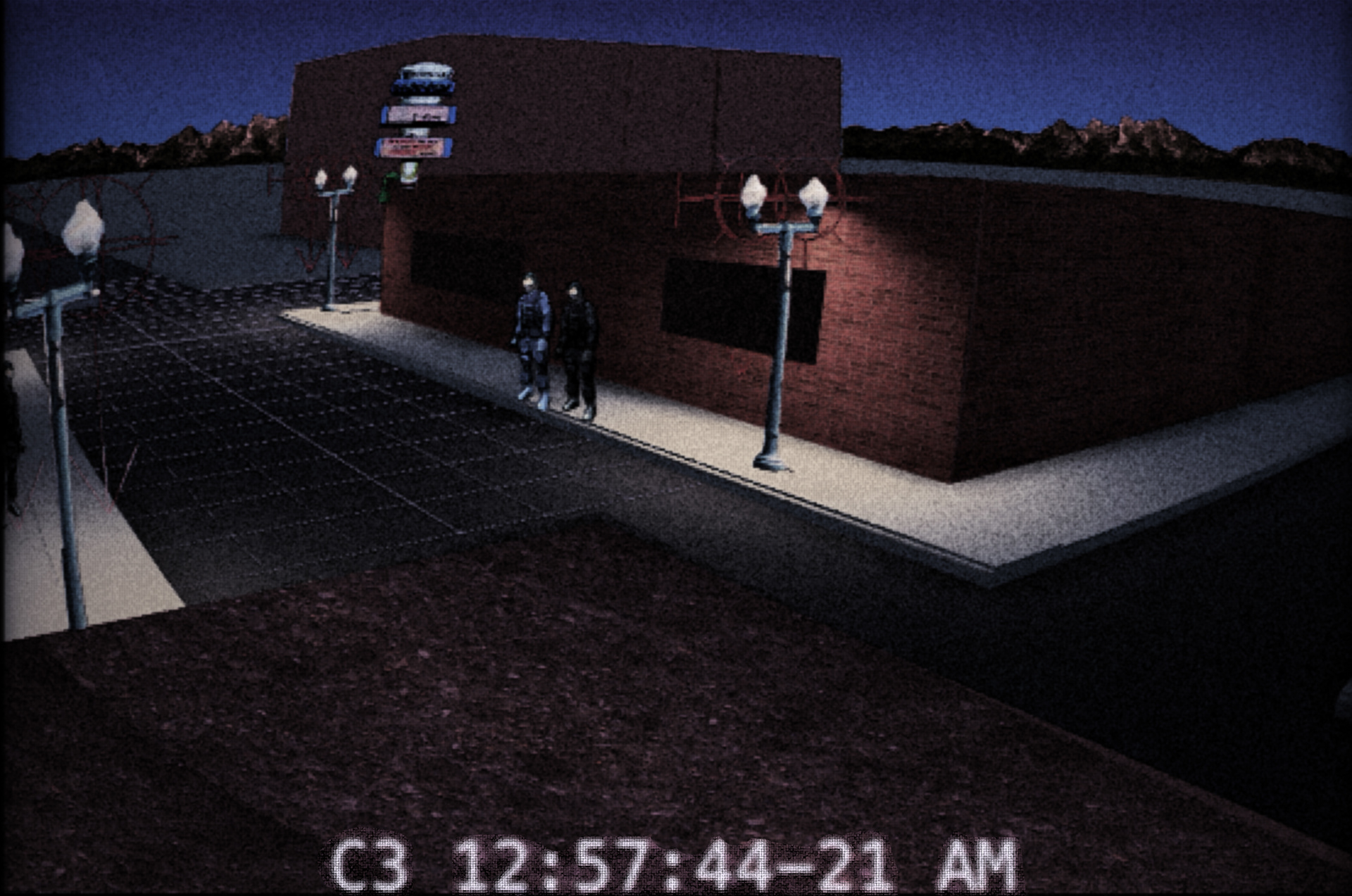
Description
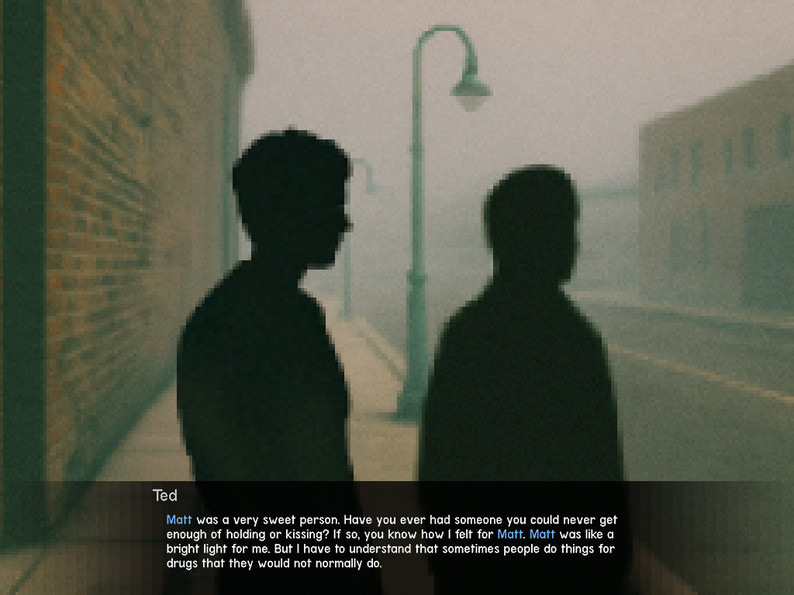
The Matthew I Knew is an atmospheric point-and-click investigation game where the player combs through real primary source documents, court testimonies, and archival evidence exploring unanswered questions around the death of Matthew Shepard in 1998 in order to evoke empathy for the main individuals connected to the case. As the player pieces together conflicting accounts and forms empathy for the victim, their loved ones, and even the killers, they discover what aspects of the case are well documented and what ambiguity exists in the historical record.
Research
This project draws from the archival record of the Matthew Shepard case, including trial transcripts, police reports, and witness testimonies. Primary research sources include Stephen Jimenez'sThe Book of Matt (2013), Judy Shepard's memoir The Meaning of Matthew (2009); JoAnn Wypijewski's 1999 Harper's Magazine article "A Boy's Life"; and Moisés Kaufman's The Laramie Project (2000).
Key theoretical texts informing the methodology include Ian Bogost's Persuasive Games (2007) on procedural rhetoric in documentary games, Judith Butler's Frames of War (2009) on documentary ethics and representation, and Robyn Frances Higgins' "Speculative Documentarian Practices" (2025) on radial standpoint disclosure and continuous present temporality.
Interaction
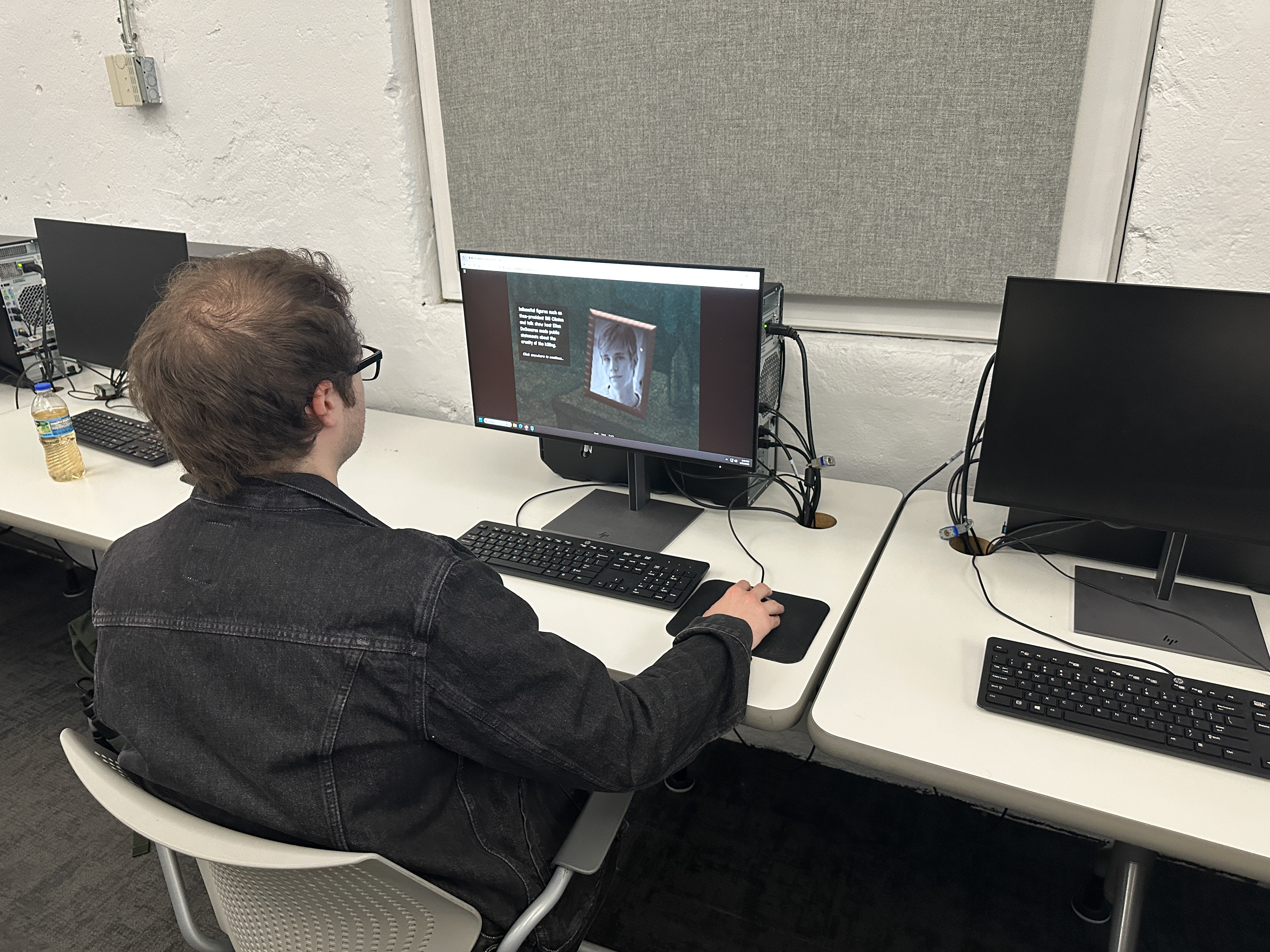
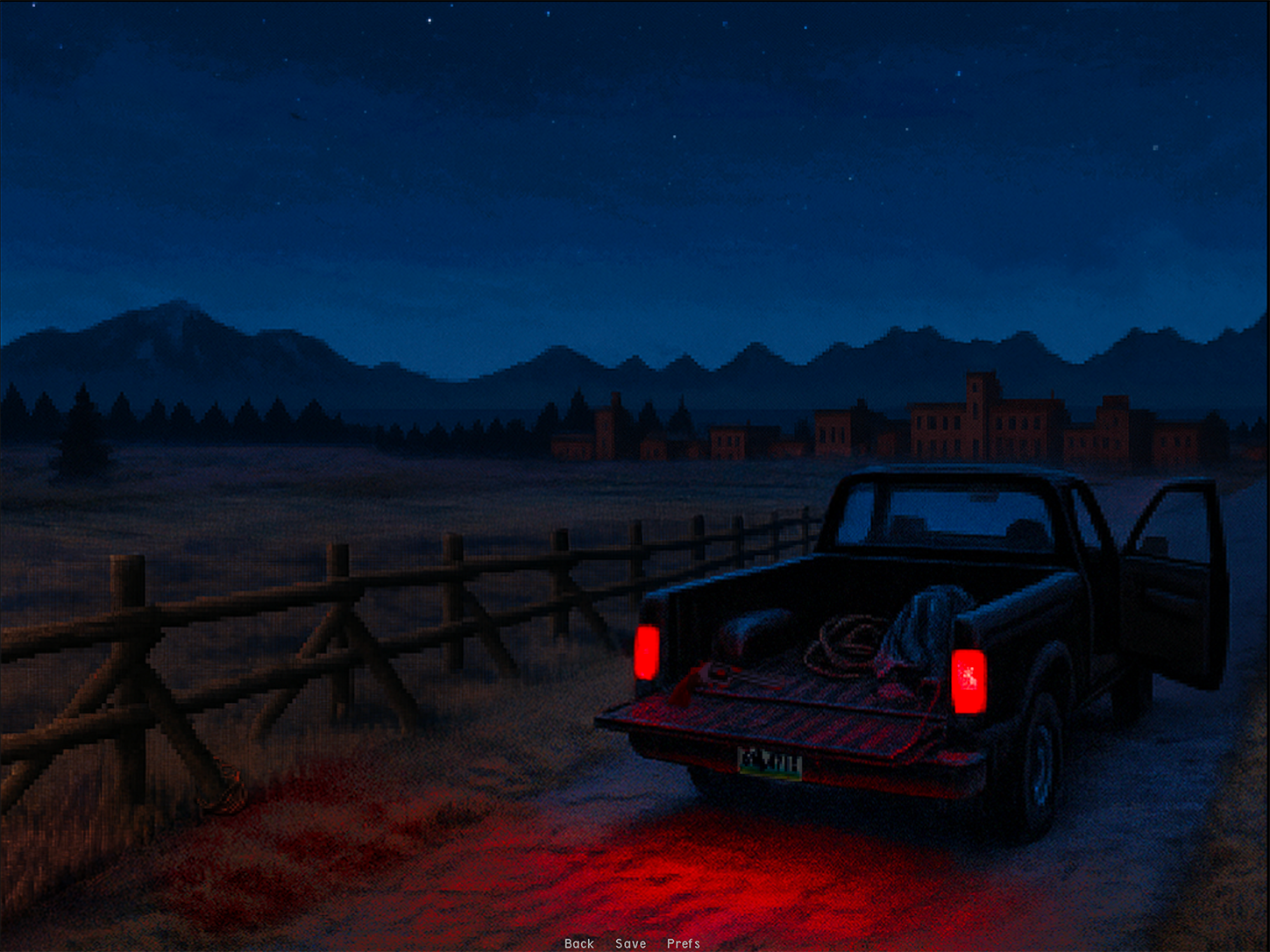
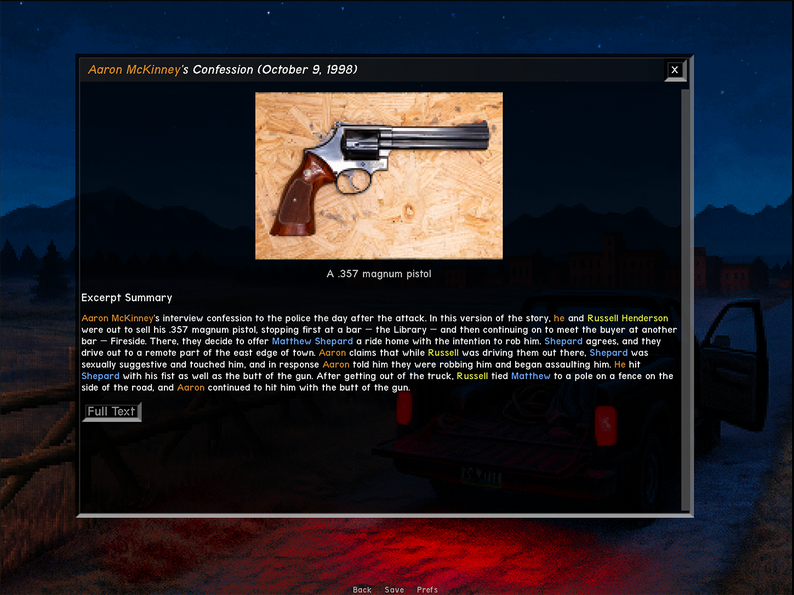
Point-and-click desktop game built in Ren'Py visual novel engine, designed to be experienced via web browser. Players navigate crime scene locations in 1990s Laramie, Wyoming, clicking hotspots to reveal scanned primary source documents presented in draggable Windows 98-style interface windows.
Process
Tools
Ren'Py (Python-based visual novel engine) for game logic and UI
Visual Studio Code for scripting
Adobe Photoshop for visual composition and document presentation
ChatGPT image generation for placeholder environmental graphics
GitHub Copilot, ChatGPT, and Gemini for code assistance and debugging
Figma for interface design mockups and scene planning
Stages
Prototyping: Created "More Than a Martyr," an initial Twine-based interactive archive testing whether players would diverge in interpretations of the killers' motivations. Results validated the historical record's ambiguity but revealed the need for narrative structure beyond pure document presentation.
Theoretical Framework Development: Conducted extensive literature review of documentary narratives about the case (1998-present), identifying patterns of mythologization and gaps in existing retellings. Developed "Frameworks for Representing Ambiguity" distinguishing genuinely unknowable aspects from well-documented but contested elements. Applied Higgins' speculative documentary theory to establish radial standpoint disclosure methodology.
Design & Scripting: Developed point-and-click mechanics in Ren'Py, implementing draggable UI windows and period-appropriate interface aesthetic. Wrote approximately 30 minutes of gameplay featuring one complete investigation scene (the attack site) plus narrative cutscene. Integrated ambient soundscapes and visual hints to guide players toward interactable elements without explicit instruction.
Iterative Testing: Conducted three rounds of playtesting, progressively adding engagement features (ambient sound, window dragging), visual accessibility improvements (hints, narrated guidance), and pacing adjustments (cutscene length, document density). Final comparative study tested interactive game against static Google Drive archive of identical content, measuring knowledge retention and empathy responses.
Technical Challenges: Code architecture required workarounds for Ren'Py's dialogue/UI overlay systems, forcing scene reloads through direct Python rather than clean integration. AI-generated environmental graphics served as placeholders requiring future replacement with professionally illustrated or photographed content. Balancing document density with player engagement proved ongoing challenge—too sparse felt unsatisfying, too dense overwhelmed.
Reflection
This project challenged my initial hypothesis that interactive formats would produce "more" empathy—instead discovering they generate qualitatively different empathy characterized by complexity rather than intensity. Players showed reduced reactive anger and increased reflective pity toward the killers, validating speculative documentary's goal of creating conditions for nuanced understanding rather than manipulating emotions.
Future development includes completing all investigation locations, adding voice acting, and assessing long-term pedagogical impact. Ultimately, the work validates interactive documentary's capacity to hold productive tension between honoring emotional truth and maintaining intellectual integrity about historical limits—developing practices for engaging ambiguous, politically charged narratives without collapsing into false certainty proves increasingly urgent in post-truth information environments.